
ACL Surgery in Delhi
If you’re suffering from knee instability, pain, or limited mobility due to an ACL injury, you’re not alone. ACL (Anterior Cruciate Ligament) tears are among the most common sports-related injuries — and Delhi offers some of the most advanced options for ACL reconstruction surgery.
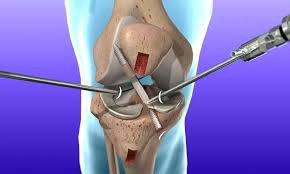
1. Why Choose ACL Surgery in Delhi?
1. Minimally Invasive Approach
Delhi is home to highly skilled and fellowship-trained orthopedic specialists with extensive experience in performing arthroscopic ACL reconstruction.
2. State-of-the-Art Facilities
Hospitals and sports injury centers in Delhi are equipped with cutting-edge arthroscopic technology, ensuring precision, safety, and faster recovery.
2. Minimally Invasive Techniques
Most ACL surgeries are done arthroscopically, resulting in:
- Smaller incisions
- Minimal tissue damage
- Less postoperative pain
2. Hybrid ACL Reconstruction
Hybrid ACL reconstruction is an advanced surgical technique that combines both autograft (your own tissue) and allograft (donor tissue) to reconstruct the anterior cruciate ligament (ACL). This approach is especially beneficial for patients who need a stronger graft due to activity level, anatomy, or revision surgery.
1. What Is Hybrid ACL Reconstruction?
A portion of the graft is taken from your own body (commonly from the hamstring or patellar tendon).
The remaining part is supplemented with donor tissue from a certified tissue bank.
2. When Is a Hybrid ACL Technique Recommended?
Small or insufficient autograft tissue
Revision ACL surgery (previous ACL surgery has failed)
Patients with larger knees or higher activity demands
Athletes needing a more durable and strong ligament reconstruction
3. Remnant-Preserving ACL Surgery
Remnant-preserving ACL reconstruction is an advanced surgical technique that retains as much of the patient’s original (torn) ACL tissue as possible during reconstruction. Unlike traditional methods that completely remove the damaged ligament, this approach uses the remaining healthy fibers to promote better healing and knee function.
1. What Is Remnant-Preserving ACL Reconstruction?
The torn ACL is partially preserved, especially the viable fibers, blood vessels, and nerve endings (called mechanoreceptors).
A new graft (autograft or hybrid) is placed alongside or through the remaining ACL tissue.
The preserved remnant supports biological healing, faster revascularization, and better integration of the new graft.
2. Benefits of Remnant Preservation
Improved Healing Response
The remnant contains natural blood supply and cells that help the graft heal faster and integrate better.
Better Proprioception (Joint Awareness)
Preserving nerve endings may enhance joint position sense, improving coordination and reducing re-injury risk.
Stronger Graft Incorporation
The remnant acts like a biological scaffold, helping the new ligament bond more securely with the bone.
4. All-Inside ACL Reconstruction
What Makes It ‘All-Inside’?
-
Both femoral and tibial tunnels are created from the inside of the joint, without breaching the outer cortices of the bones.
-
A shorter graft, usually harvested from the patient’s hamstring tendon, is used.
-
Specialized implants and buttons are used for strong, secure fixation.
Advantages of All-Inside ACL Reconstruction
-
Minimally Invasive
-
Smaller skin incisions and less tissue disruption
-
Less postoperative pain and swelling
-
-
Preserves Bone Stock
-
Particularly important for young patients or those needing future surgeries
-
-
Faster Recovery
-
Reduced trauma allows for quicker rehabilitation and earlier return to daily activities
-
5. ACL Reconstruction with Internal Brace FiberTape Technique
What is FiberTape Internal Bracing?
-
FiberTape® is a non-absorbable, ultra-strong braided suture tape.
-
During ACL reconstruction, the graft is augmented with FiberTape, which is anchored securely to the femur and tibia.
-
This internal brace acts like a protective layer, supporting the graft and reducing stress during early healing.
Benefits of Internal Brace with FiberTape®
- Enhanced Graft Protection
- Acts as a backup to the graft in the early healing phase
Conclusion
ACL Reconstruction with Internal Brace using FiberTape® represents a significant advancement in orthopedic sports medicine. By combining traditional graft reconstruction with modern suture augmentation, this technique offers enhanced stability, accelerated recovery, and added protection during early healing — especially for active individuals and athletes at higher risk of re-injury.
With precise surgical technique and tailored rehabilitation, patients can look forward to a faster and safer return to full activity. If you’re considering ACL surgery, the internal brace approach may be the ideal solution to restore confidence and performance in your knee.