
Knee Cartilage Damage
Knee Cartilage Damage
Cartilage is the smooth, rubbery tissue that covers the ends of bones in your joints. In the knee, this cartilage enables smooth movement and acts as a cushion to absorb shock. When cartilage is damaged—due to injury, overuse, or degeneration—it can lead to pain, swelling, stiffness, and long-term joint problems.
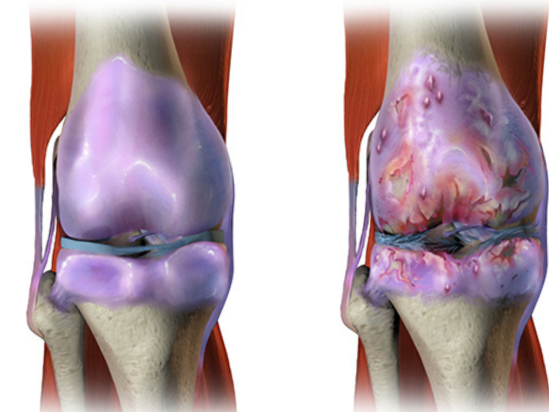
Causes and Symptoms of Knee Cartilage Damage
Cartilage in the knee is a tough, flexible tissue that allows smooth joint movement and absorbs shock. However, because it lacks a blood supply, it heals poorly when injured. Here are the most common causes:
1. Acute Trauma or Injury
Sudden impact during sports or accidents
Direct blow to the knee
Twisting injuries, often accompanied by ligament damage (e.g., ACL tear)
2. Repetitive Stress or Overuse
High-impact sports like running, football, or basketball
Jobs or routines involving frequent kneeling or squatting
Improper joint mechanics over time
Diagnosis and Evaluation
1. Medical History and Physical Examination
Asking about the onset of symptoms (pain, swelling, stiffness)
Noting any past knee injuries or surgeries
Assessing your activity level, job, or sports involvement
Conducting a physical exam to check for tenderness, swelling, joint line pain, grinding, or limited range of motion
2. Imaging Tests
1. X-rays
Useful for evaluating bone structure
Can detect joint space narrowing (suggestive of cartilage loss)
Helps rule out fractures or arthritis
2. MRI (Magnetic Resonance Imaging)
The most effective non-invasive method to visualize soft tissues, including cartilage
Shows cartilage defects, swelling, and surrounding tissue injuries
Can help grade the severity of the damage
3. CT Scan with Arthrogram (occasionally used)
Provides high-resolution images of joint structure
May help in pre-surgical planning
Chondroplasty Treatment for Knee Cartilage Damage
Chondroplasty is a minimally invasive arthroscopic procedure used to treat damaged or frayed articular cartilage in the knee. The goal is to smooth the cartilage surface and reduce joint friction, helping alleviate pain and prevent further degeneration.
This procedure is most effective for early-stage cartilage damage and is often performed in combination with other procedures such as meniscus repair or ligament reconstruction.
During the procedure:
A small camera (arthroscope) is inserted into the knee joint.
The surgeon uses specialized tools to shave, trim, or smooth areas of loose or damaged cartilage.
Damaged cartilage is removed, and the surrounding area is reshaped to promote a healthier joint environment.
Advanced Cartilage Procedures Offered
1. Microfracture Surgery
A minimally invasive arthroscopic procedure that creates tiny holes in the underlying bone to stimulate the growth of new cartilage.
-
Best for: Small, contained cartilage defects
-
Benefits: Encourages natural healing with fibrocartilage
-
Recovery: Weight-bearing is limited initially; rehab is essential
2. Autologous Chondrocyte Implantation (ACI)
Involves harvesting a patient’s own cartilage cells, growing them in a lab, and re-implanting them into the damaged area.
-
Best for: Larger, full-thickness cartilage lesions
-
Benefits: Uses the body’s own cells to regenerate hyaline-like cartilage
-
Two-stage procedure requiring careful rehabilitation
Benefits of Chondroplasty
Minimally invasive with small incisions
Shorter recovery time compared to major cartilage surgery
Helps reduce pain and improve joint function
Delays the progression of arthritis
Can be performed as an outpatient procedure
Enhances outcomes when combined with other knee surgeries
Contact Us
If you’re experiencing knee pain, stiffness, or have been diagnosed with cartilage damage, our expert orthopedic team is here to help. We offer advanced diagnostic tools and personalized treatment plans — including minimally invasive and cartilage restoration procedures — to get you back on your feet.